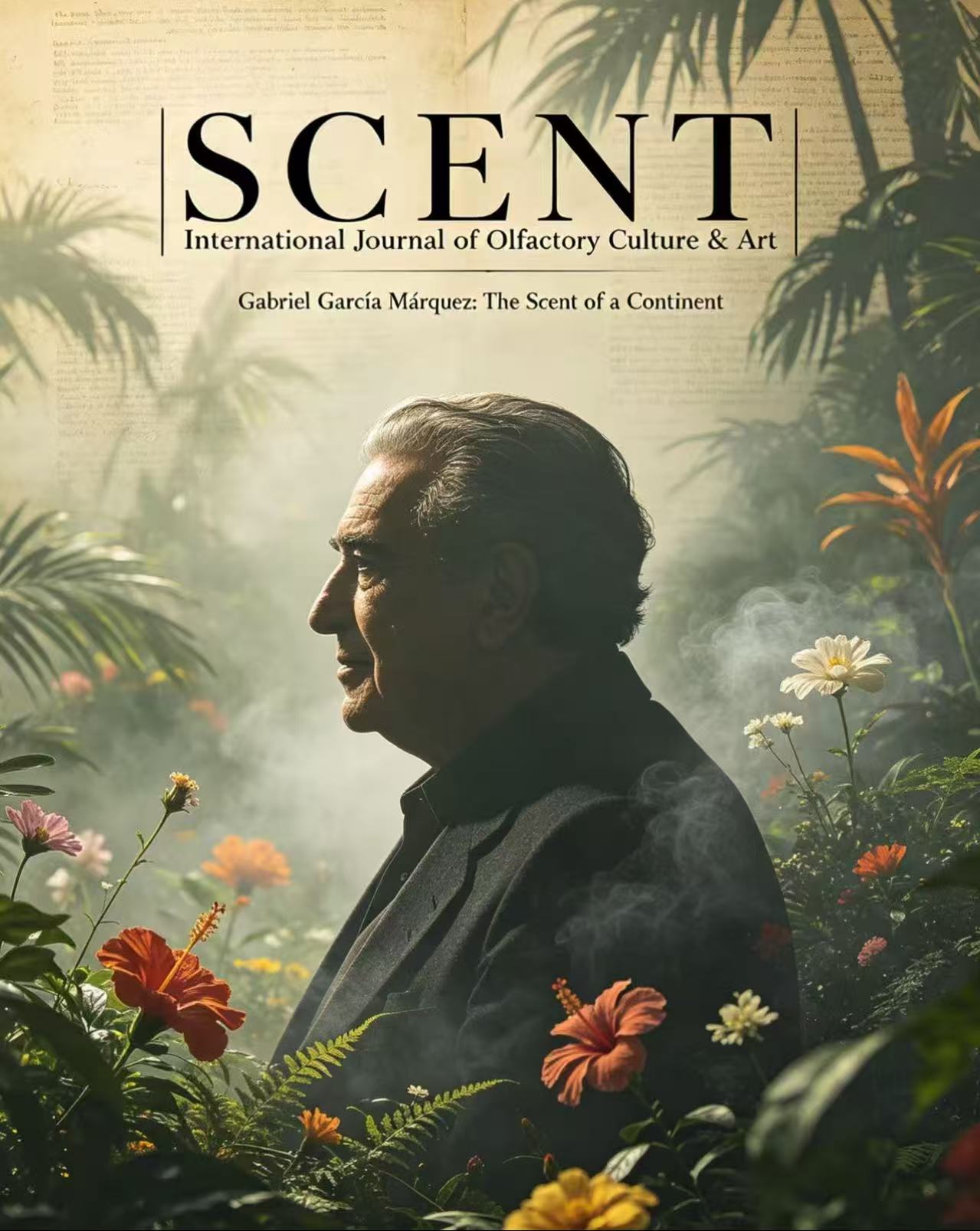
The Scent of a Continent
Abstract
As a leading figure of magical realism and one of the most important writers of the 20th century, Gabriel García Márquez takes olfaction as a core narrative strategy to lead readers into the beautiful, cruel, and memory haunted interior of Latin America. Scent in his works is not merely a sensory detail but a carrier of identity, memory, death, love, and historical trauma. Focusing on One Hundred Years of Solitude, Chronicle of a Death Foretold, Love in the Time of Cholera, and Leaf Storm, this paper explores how García Márquez constructs an olfactory narrative system that penetrates daily life and magical reality. It analyzes the symbolic functions of fragrance, rot, smoke, medicine, and floral scents in shaping characters, fixing time, witnessing violence, and embodying eternal love. In addition, combined with the Odorama sensory film practice at Capitole Theatre in Lausanne, this paper discusses the intermedial connection between literary olfaction and contemporary olfactory art, demonstrating how scent becomes a shared language of emotional communication and cultural memory. This study reveals that García Márquez’s olfactory poetics not only enriches the aesthetic form of magical realism but also provides a profound paradigm for understanding Latin American history, spiritual life, and human sensory experience.